
Dragunov Receivers and Internals Parts Page Two
Iron Sights
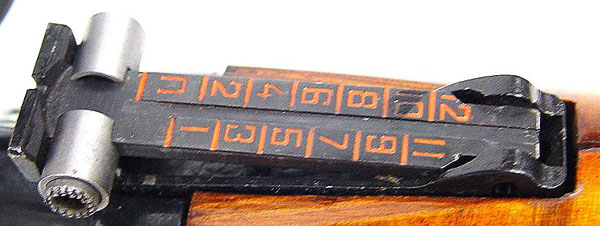
The Dragunov rear sight is calibrated up to 1200 meters starting with the 300 meter battle setting then 100 meters, and so on. The Norinco NDM-86 rear sight leaf (above) has the Russian character "n" for the battle setting. Apparently the Chinese directly copied the Russian rear sight and even adopted their cyrillic symbol for the 300 meter battle setting. On Chinese SKS's and AK's there is a D marking for the battle setting. There are rumors floating around some internet discussion forums that the Chinese rifles have Russian parts or receivers. The Chinese manufacturer claims their Type-79 rifle is an almost exact copy of the Russian SVD and was "reverse-engineered" from some Russian samples but no Russian parts were ever used. So far there has been no credible proof that any Russian parts are in the Chinese NDM-86's. For example below are a Russian SVD sight leaf (left) and Chinese NDM-86 sight leaf(right). Note the differences indicated below.
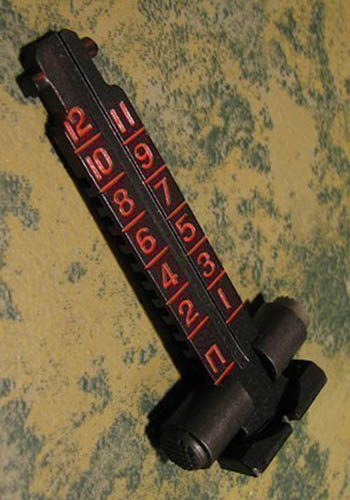
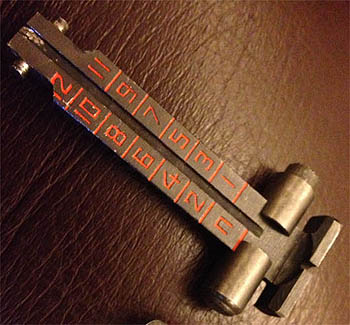
The Russian sight markings have rounded numbers compared to the Chinese versions. Also the Russian sight leaf has a notched or bevelled edge at the top compared to the flat edge on the Chinese sight.
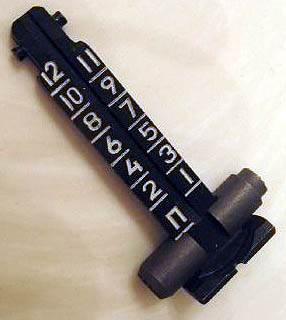
You will also find some Russian sights with white painted numbers. According to "GEORGEspb" on akfiles.com the colors indicate:
Red - 1963 to 1980
Red bold - 1980 to 1991
White or no color - after 1991
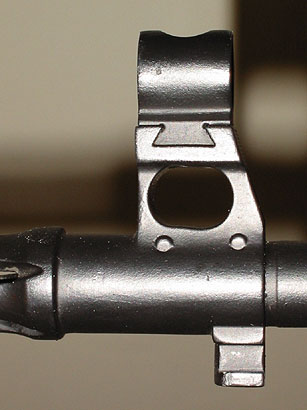
The NDM-86 and SVD have a front sight assembly that incorporates the flash hider and bayonet lug. The entire unit is pressed onto the end of the barrel and held in place by two tapered cross pins. A special tool is used by the factory to ensure the sight assembly is installed perfectly aligned with the rear sight leaf.
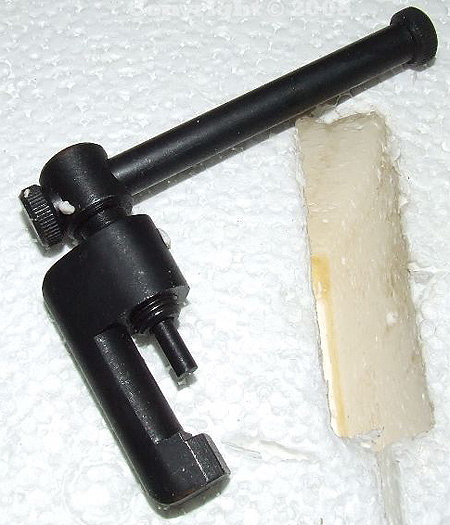
Chinese sight tool.
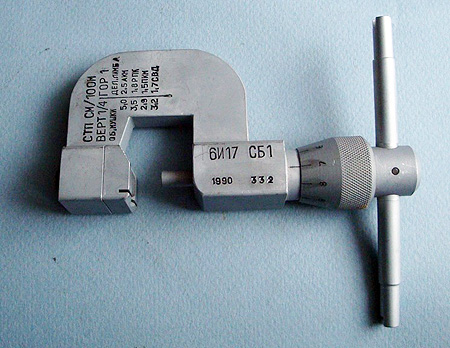
Russian sight tool. Can be used on AK and PKM sight as well.
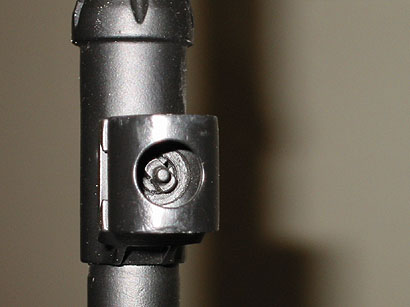
The front sight blade (seen through the hole in the sight hood) adjusts for elevation in the tradition manner of inserting the special tool through the top hole and turning counter or anti-clockwise. If your tool has gone missing an SKS/AK sight adjuster can be used.
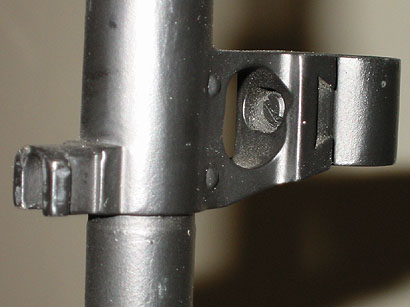
The front sight post protrudes through the bottom of the hooded front sight protector. The entire hood assembly is drift-adjustable for windage. Apparently the SVD sight post is not exactly the same as the AK post, though they look similar.
The bayonet lug is standard Kalashnikov AK design.
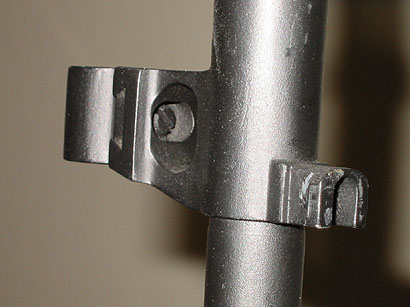
Do not use a hammer and punch to adjust the windage. The hood is held onto the sight base very tightly and you will damage it if you try to force it with blows from a hammer. Use the proper tool which was included with your accessory kit from the factory.
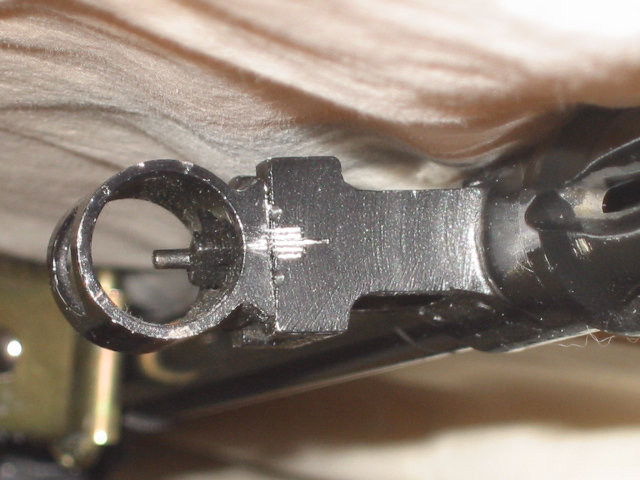
Indexing marks for the front sight.
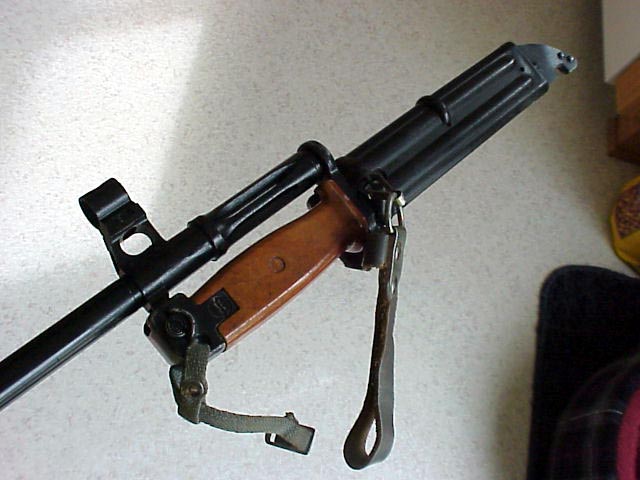
Chinese AK bayonet fits Chinese NDM-86.
Flash hider
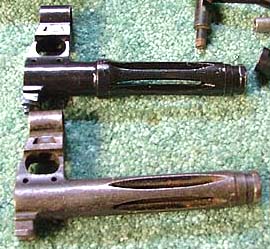
There is another rare flash hider variation for the Russian military SVD. This early version has a smooth body. It's not known why the design was changed. Special thanks to Frenchy for sending these pics.

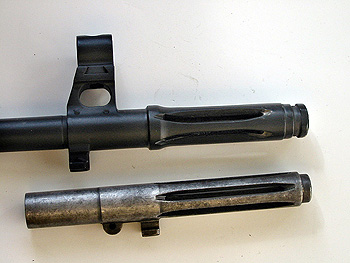
The flash hider for the British L1-A1 FAL rifle is very similar to the SVD sniper flash hider. A crafty person might be able to adapt one to fit an Izhmash Tiger rifle. These can be found for as cheap as a few dollars on various web sites.
Gas system
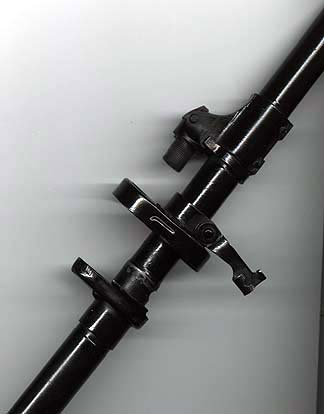
The gas block on the SVD barrel. Note the threads for the adjustable gas valve. Also note the barrel remains thin past the hand guard retainer.
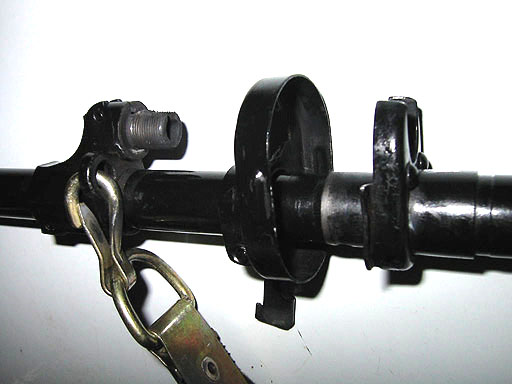
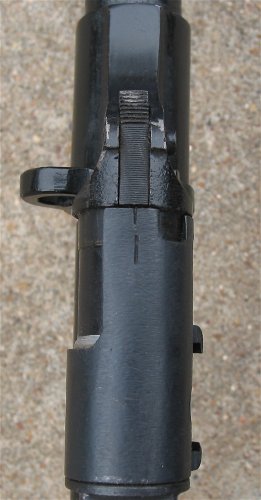
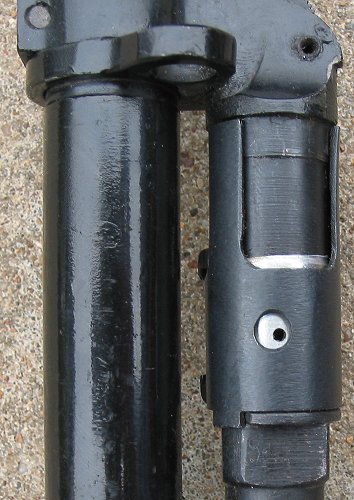
The adjustable gas regulator as found on the Chinese NDM-86 in 7.62x54R and Russian SVD. These photos show the regulator set to position #1 which is for normal shooting. You can see it opens a small gas port to let a small amount of gas escape when the rifle is fired.
Thanks to "SturmGrenadier" for providing these pics.
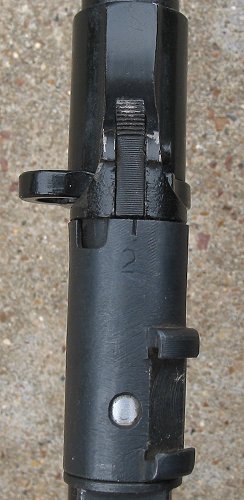
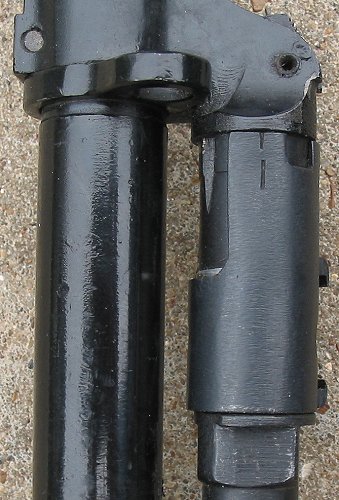
Position #2 is for when the rifle is fouled with carbon build-up in the gas port or when shooting in extreme cold or high altitude. This closes the gas escape hole and directs all the gas to the piston. In most cases you will never need to use this setting unless you never clean your rifle, especially when using corrosive surplus ammunition.
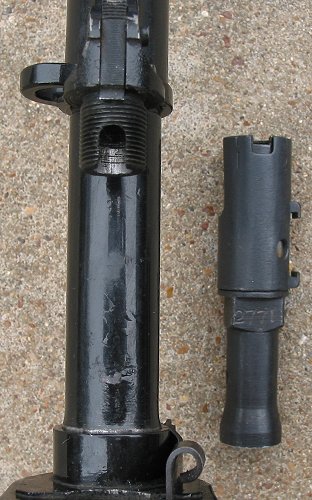
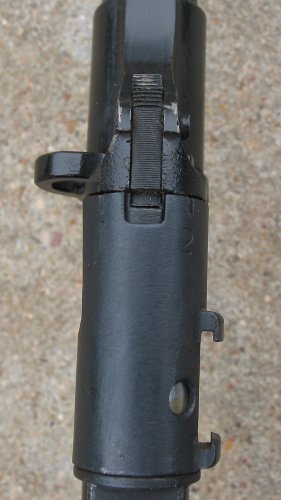
The gas tube can be unscrewed and removed when the adjuster sleeve is rotated so the notch lines up with the locking lever at the front of the gas block. Rotating the sleeve is accomplished by putting the base of a cartridge into the slot seen next to the gas port hole. Insert the cartridge and use as leverage to twist the sleeve around to your desired position. The gas tube may be on tight so you might need to use the wrench (shown below) on the end of the cleaning kit tool (or your own small adjustable box wrench) to loosen it.
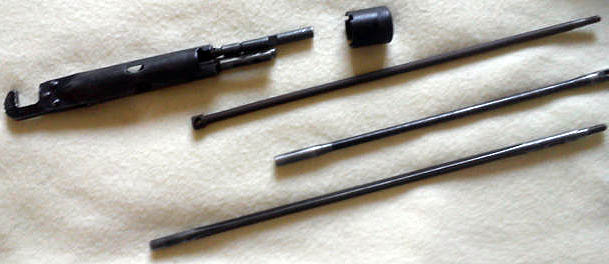
More discussion about removing the gas tube can be found here.
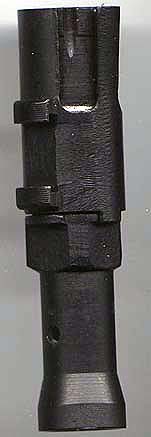
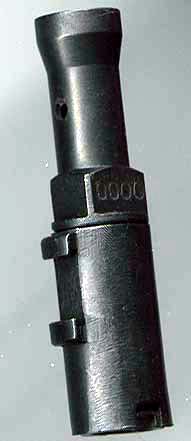
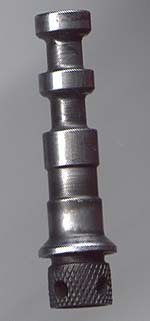
The gas piston (right) sits inside this regulator housing (center and left). It too is numbered to the receiver. For some reason the gas regulator doesn't function on the 7.62 NATO version of the Chinese Norinco NDM-86.
Barrel
The number stamped onto the SVD barrel is not supposed to match the receiver serial number. The only parts that should be matching numbers are parts that can be removed from the rifle during cleaning.

Receiver clamp used to remove the barrel.

Barrels are screwed into the receiver and no cross pin is used.

There is a gap in the threaded portion where the rear handguard retaining plate is installed before being screwed to the receiver.
"VTB" on the akfiles.com forum had this to say about Tigr barrels on models not imported to the U.S.:
"Tigers in some batches of production were made without threads - the barrel was just inserted into the heated receiver. 1992-1993 tigers are fine. 2015-2016 are too.
But in 1998-2008 they are without threads. You can check if the barrel is threaded if you look at the barrel chamber area. The threads can be clearly seen there (in the area where bolt charging handle is located when the bolt is closed)"
Receiver covers
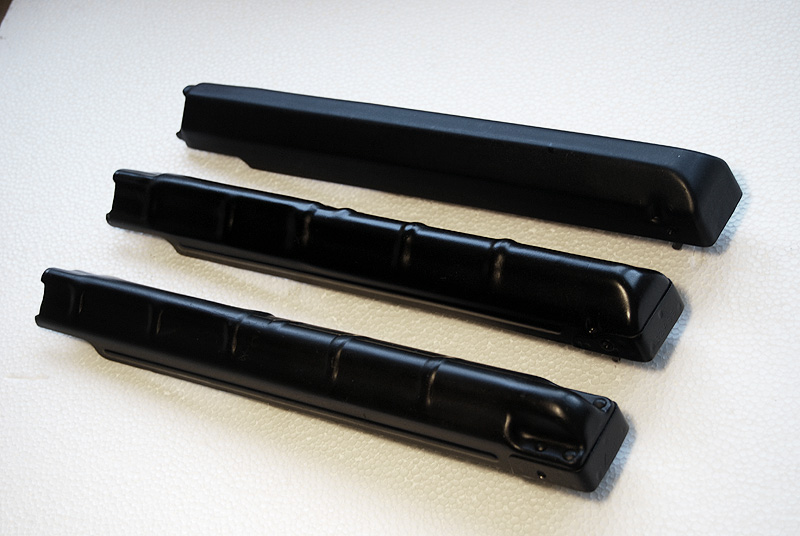
There are three generations of receiver covers. The top one is the latest version which is thicker and reduces receiver flex. The middle version is the most common one found on US imported Russian Tiger rifles. It is the least rigid of the three designs. The bottom cover is commonly found on Chinese NDM-86 rifles and early Russian SVDs.
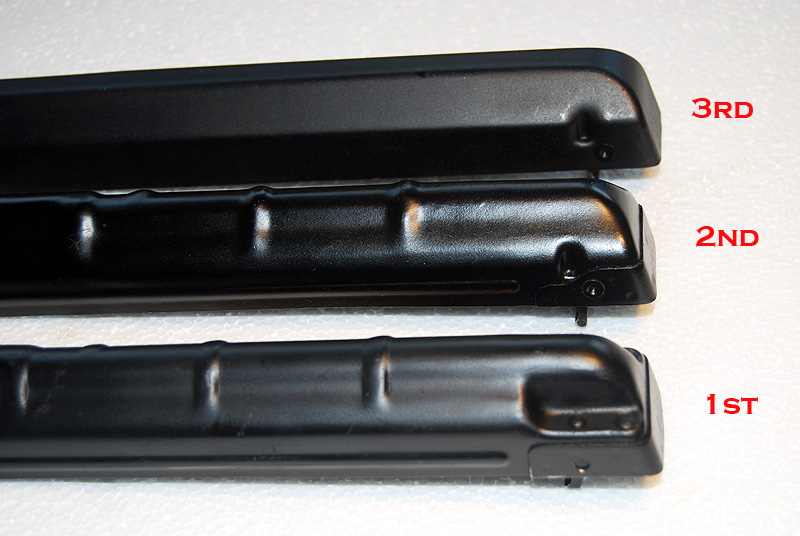
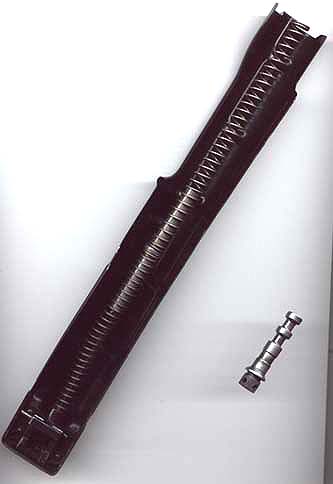
The bottom of the receiver cover shows the recoil spring assembly. It is mounted to the cover on a hinge and is removed by punching out the rear axis pin.
Back to top? Hit the "Home" button on your keyboard.